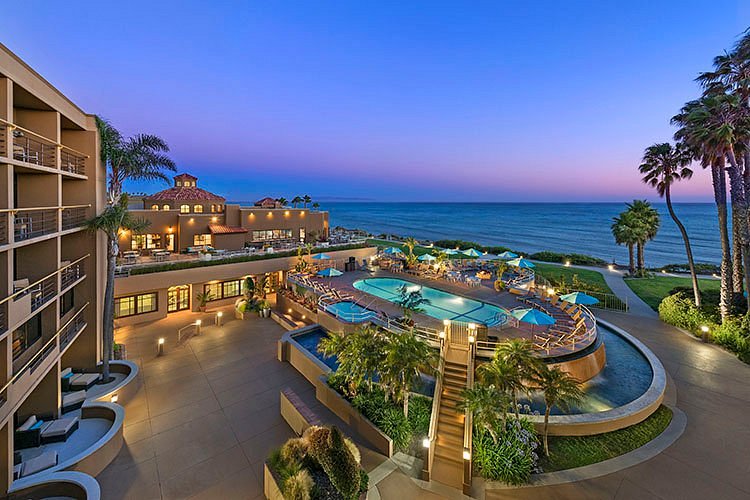
The WCC returns to The Cliffs Resort for our 42nd Annual Meeting May 14-15, 2026
- 5/14 Golf Tournament at Cypress Ridge, set tee times begin at 8:30am
- 5/14 Board Meeting 3pm-5pm (RESCHEDULED from Saturday morning!) Download the agenda
- 5/14 Exhibitor setup from 2:00pm
- 5/14 Welcome Reception and Exhibits 5:30-8pm
- 5/15 Education Session and Exhibits 7am-3pm (schedule below)
- 5/15 Reception and dinner with live/silent auctions 5:30pm-9pm
The West Coast Chapter returns to The Cliffs Resort in Pismo Beach for our 42nd Annual Meeting; with its stunning views, impeccable service, and nearby attractions it is no wonder the WCC has called The Cliffs our “home away from home” for many years.
Our Annual Meeting is the main event for our chapter! It is our time for a fun golf tournament; for a super informative Education Session and NEW for 2026 we will include two Associate member presentations during the Education Session; a time to elect new board members; and it is THE fundraising event for the chapter and the WCC Industry Advancement Fund. Also new for this year, the board meeting will be on Thursday after golf instead of Saturday morning. This condenses the schedule to two action-packed days!
Our generous sponsors and hard-working members continue to make this chapter a success. Keep your eye on this page for more information.
Registration closed on April 10, 2026.
Download Candidate information and a proxy ballot.
Education Session Schedule:
7:00–7:45am Breakfast sponsored by KB Tech
7:45 – Introductions – Ashley Mahaffey Tullius, Don H. Mahaffey Drilling
7:45 – 9:00 Ryan Turner, Caltrans
Regents Slide Repair Projects on Highway 1: Regents Slide in Monterey County resulted in closure of the scenic Highway 1 corridor through Big Sur from February 2024 through January 2026, severely disrupting traffic for tourists and local residents. The large slide complex consisting of multiple interconnected landslides and rockfall features completely covered Highway 1 and left a top-down landslide mass removal as the only safe and viable repair option. Building on the success of other Big Sur slide repairs in recent years including Mud Creek and the nearby ongoing Paul’s Slide projects, Caltrans successfully repaired Regents Slide ahead of schedule. This presentation features chronological first-person point-of-view videos from the field over the duration of the project and highlights two aspects that led to success: (1) integration of monitoring data from traditional surveying, UAS imagery and photogrammetry, geotechnical instrumentation (inclinometers, shape arrays, TDR, vibrating wire piezometers and surface deformation measurements), and daily boots-on-the-ground observations to inform real-time decision making regarding the repair plan and safety, and (2) collaboration between the many involved parties including contractors, Caltrans geotechnical, blasting crews, surveyors, helicopter teams, and more.
9:00 – 10:00 David Gee, Senior Safety Engineer, Cal/OSHA
Cal/OSHA Regulatory Requirements for Foundation Drilling Contractors: Cal/OSHA regulatory requirements continue to evolve year after year. This presentation will dive into the general regulatory requirements as it relates to the operational aspects of foundation drilling contractors. Attendees will also gain insight as to the requirements of the Injury and Illness Prevention Program and learn about current enforcement trends that had affected foundation contractors
10:00–10:30am Coffee Break sponsored by Keller
10:30 – 11:15 Anne Lemnitzer, UC Irvine
The Hidden Costs of Getting Installation Wrong. Your pile is only as good as the way you install it: For drilled displacement piles (DDPs), installation is everything. Unlike conventional drilled piles, DDPs are created by penetrating while laterally displacing the surrounding soil. That process controls pile quality, axial capacity, and the level of ground improvement achieved. When installation is done right, DDPs can provide both strong foundation performance and meaningful soil densification. When it is not, much of that benefit can be lost. This presentation draws on case histories from across the United States to show how installation controls performance, what levels of ground improvement can realistically be expected, and what field requirements must be met to achieve higher capacities and reliable densification. A California case history in silty sand will demonstrate how installation differences produced distinctly different outcomes in two test zones, both in measured ground improvement and in axial pile response. The talk also introduces a revised version of the Bustamante and Gianeselli axial capacity approach for DDPs, updated to better reflect modern pile lengths, higher load demands, increased rig power, and current installation technology.
11:15 – 11:30 Tait McCutchan, Malcolm Drilling Company
Large diameter secant pile cutoff wall; Priest Rapids Dam right embankment improvement project. The Priest Rapids Right Embankment Improvement Project involved replacement of the existing right earthen dam embankment with a Roller Compacted Concrete (RCC) structure to improve seepage cutoff and seismic resiliency. A secant pile cutoff wall was required to connect the core of the existing earth embankment with the new RCC structure that was built downstream as the earthen embankment remained in service with a full reservoir pool in place during construction.
A 270’ long secant pile cutoff wall was chosen as the solution by the project design engineer, stipulating that the wall must provide a continuous minimum 5’ wall thickness and with a minimum of 5’ embedment into intact basalt with unconfined compressive strengths more than 30,000 psi. Full depth temporary casing was required during pile construction to protect the dam integrity as was as-built 3D modeling and down hole camera inspection to monitor installation quality and tolerances. Plastic concrete composed of cement, hydrated bentonite slurry, fine, and coarse aggregates was batched on site and provided a low strength and impermeable matrix with properties similar to the existing embankment core.
Selection of pile sizing and spacing was left to the drilling subcontractor by the engineer. MDCI elected to utilize the oscillator method with 3 Meter casing, placing 9.84’ diameter piles on center-to-center spacings of 7.49’ to minimize the total amount of piles and joints, while providing the maximum amount of verticality tolerance. Installing drilled shafts in an active dam embankment required continuous monitoring of excavated materials and water levels to ensure dam stability. Sonic Caliper equipment was used to as built each pile, with results modeled in REVIT to monitor overlap and wall thickness in real time. MiniSID down hole inspection camera was utilized to monitor shaft cleanliness and inspection of in-situ rock.
11:30 – 11:45 Associate Presentation Jeffrey Machine
11:45 – 12:00 Associate Presentation Center Rock Drilling
Noon–1:00pm Lunch sponsored by Jeffrey Machine
1:00 – 1:15 Rudy Leon, Condon-Johnson &. Assoc.
Bear Gulch Pipeline Protection Soil Nail Wall Project to stabilize an eroding bankside and protect an existing 20” waterline within the hillside. Pipeline provides drinking water to residents. The work was performed with a creek diversion in place to allow access for the soil nail operation within the creek bed.
1:15 – 2:15 Steve Maddox, Managing Director, Forvis Mazars From Data to Decisions: AI in Construction: Artificial Intelligence is rapidly moving from experimentation to execution across the construction industry—but value is only realized when AI is built on trusted, connected data and aligned to real operational decisions.
This session focuses on how construction firms are using AI today to move beyond static reports and dashboards toward decision-ready insights across operations, finance, and the field. We will explore why data quality, governance, and connected workflows matter more than ever, how AI agents are beginning to automate routine analysis and exception handling, and what leaders should do now to prepare their organizations for responsible, scalable AI adoption.
Attendees will leave with a clear understanding of practical AI use cases in construction, common pitfalls to avoid, and a simple framework for moving from data collection to confident, timely decision-making.
2:15 – 3:00 Rick Marshall, Safety Director, ADSC
Safety Leadership: When people think of workplace safety, the first things that often come to mind are OSHA standards, checklists, audits, and compliance measures. While these tools are essential, the human element of safety leadership is often overlooked and it’s the most critical piece of all. Safety leadership plays a pivotal role in fostering culture of safety, setting the tone for how employees view and prioritize safety for themselves, each other, and the company.
3:00 – WCC Safety Committee Meeting, Ashley Mahaffey Tullius
Bookings
Platinum $3,001+ Sponsors
Specializing in Rebar Fabrication, Preassembled Rebar Products, and Stud Rails.
KB International is the global leader in synthetic polymer slurries and stabilization systems for the construction of deep earth excavations including drilled shafts, diaphragm walls, tunnels, and mineral coring.
Our commitment to high-quality auger tooling is evident in our vast inventory and ability to meet your specific needs. Whether you need standard or specialized drilling tools, our auger tooling parts set your project up for success
As a long recognized leader and innovator in the Drilled Shaft Industry, Watson is uniquely qualified to design and manufacture foundation drill rigs for drilled shaft (bored pile) construction.
We are the premier sales and service center for specialist foundation engineering equipment. As a proud subsidiary of BAUER Maschinen, we offer a comprehensive range of rotary drilling rigs, foundation cranes, diaphragm wall equipment and related tools.
Gold $1,601 – $3,000 Sponsors
Silver $701 – $1,600 Sponsors

Bronze $200 – $700 Sponsors
Sinclair Well Products
Center Rock Drilling
Hammer & Steel
Keystone Drill Supply
Condon-Johnson & Assoc.
Ron & Cathy Thomas (Hall of Fame)
Apex Geotech
Tech Drilling Group
Western Equipment Solutions
Williams Form Engineering
Inland Concrete Products
Petra Drilling Supply